
Publications
I have published 7 first-authored journal papers and 8 first-authored conference papers. Here are some selected publications. For the full publication list, please refer to my CV.
*: Joint first-author.
Autonomous Driving Optical Networks
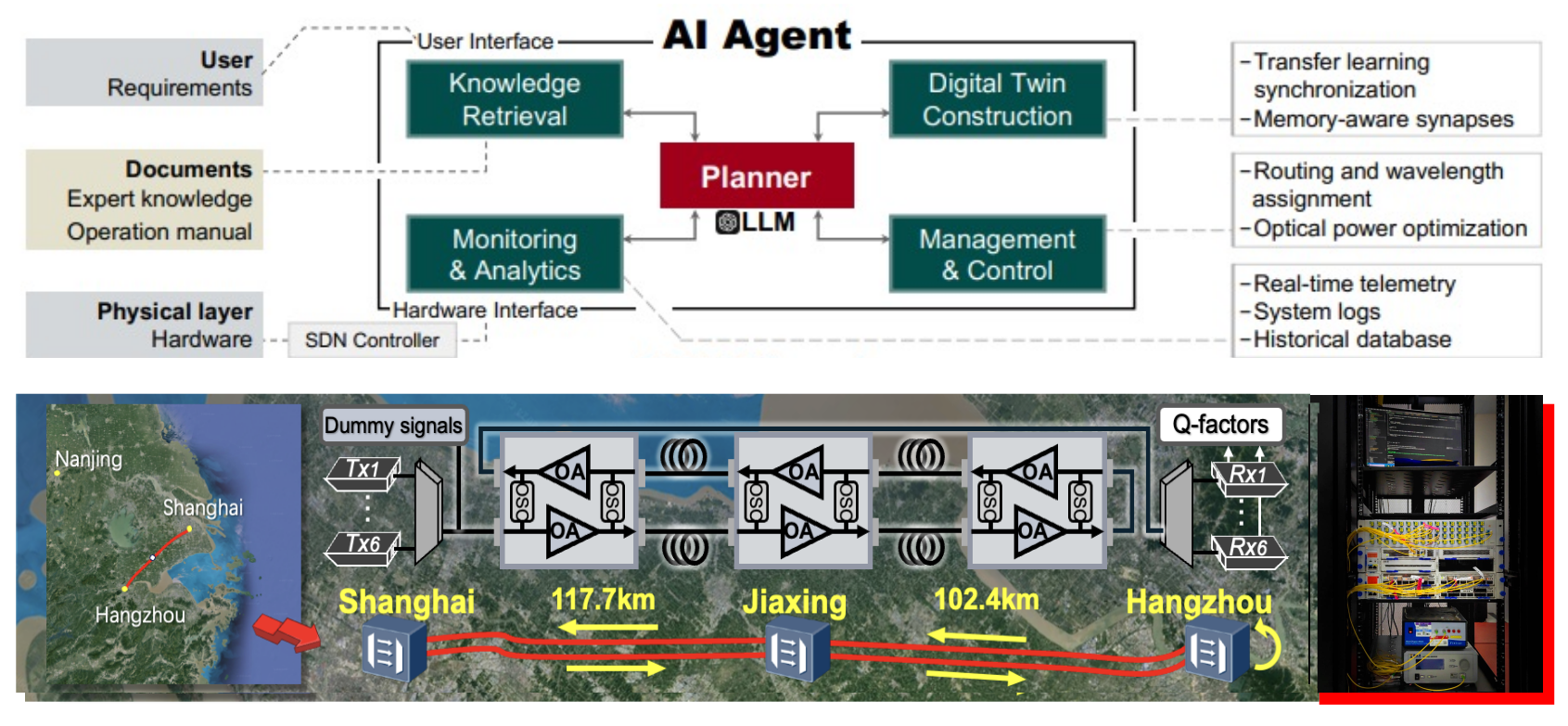
First field trial of LLM-powered AI agent for lifecycle management of autonomous driving optical networks
Xiaomin Liu, Qizhi Qiu, Yihao Zhang, Yuming Cheng, Lilin Yi, Weisheng Hu, Qunbi Zhuge*
- Accepted by Optical Fiber Communication Conference (OFC) 2025
- Built the world’s first field trial demonstration of the LLM-powered AI agent for the network lifecycle.
- Supported diverse network events, including wavelength add/drop, failure management, and power optimization.
- Showed the potential of LLMs to control and manage autonomous optical networks.
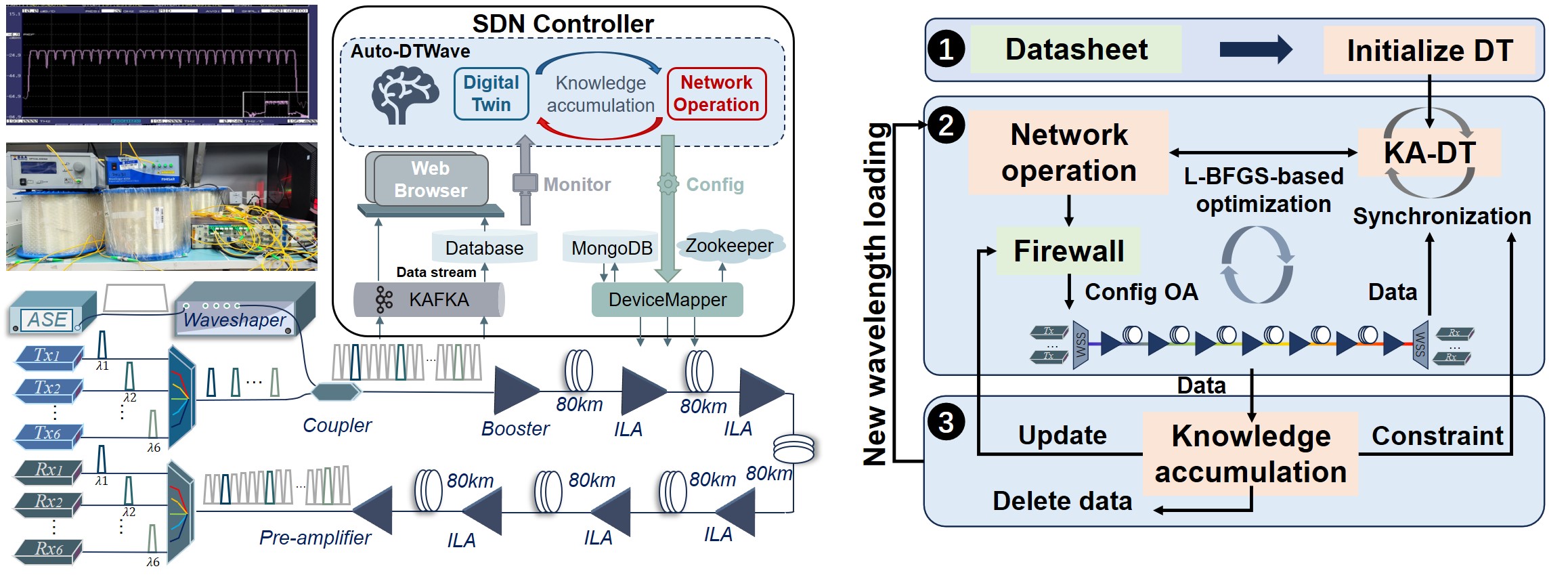
Auto-DTWave: Digital Twin-Aided Autonomous Optical Network Operation with Continuous Wavelength Loading
Xiaomin Liu, Qizhi Qiu, Yihao Zhang, Meng Cai, Yichen Liu, Lilin Yi, Weisheng Hu, Qunbi Zhuge*
- Accepted by Optical Fiber Communication Conference (OFC) 2024
- Developed joint online digital twin (DT) construction and amplifier configuration with continuous wavelength loading in a commercial testbed. The DT achieves an RMSE of 0.37 dB, assisting near-optimal amplifier configuration with less than 0.1 dB average Q-factor deviation.
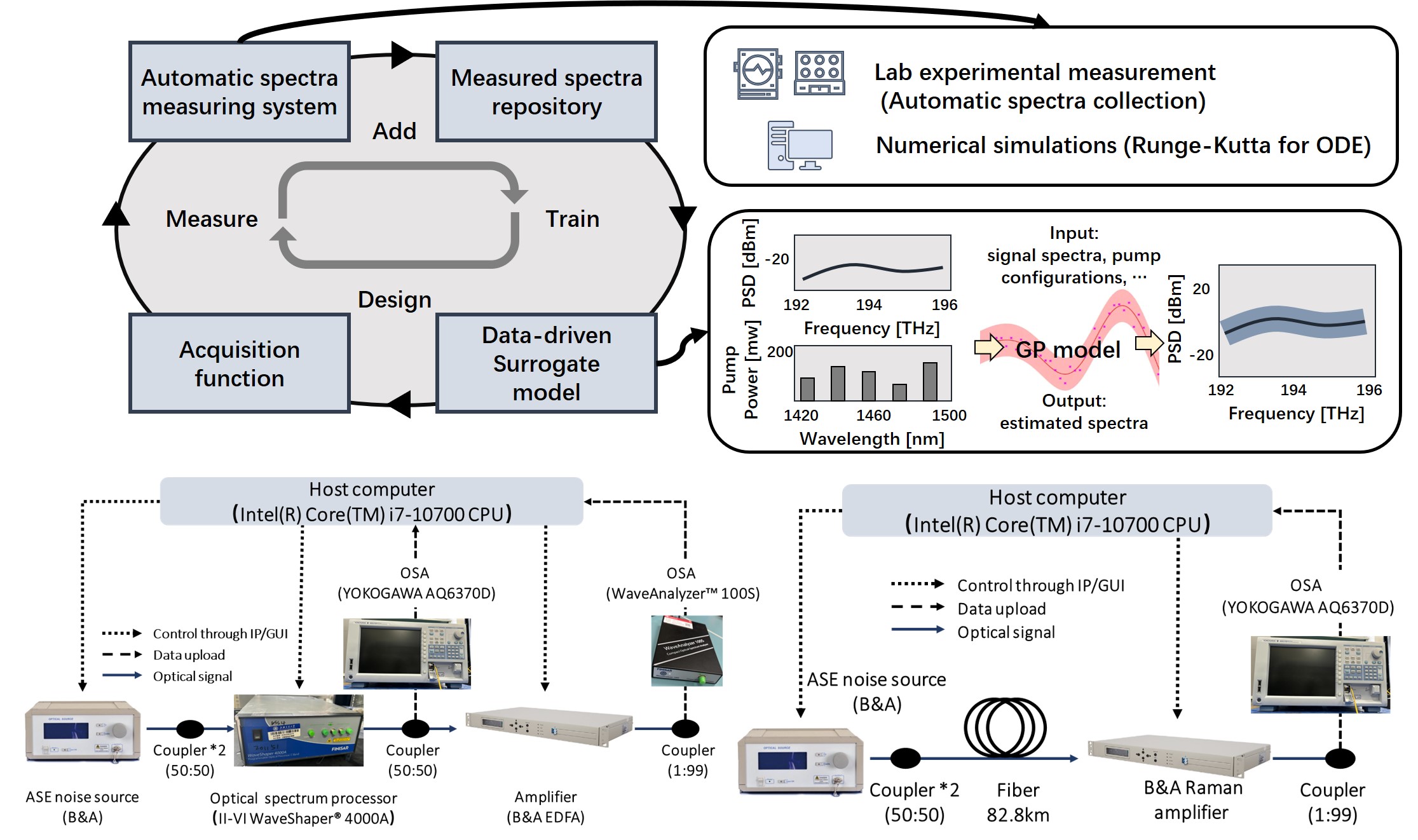
Digital Twin Modeling and controlling of Optical Power Evolution Enabling Autonomous-driving Optical Networks: A Bayesian Approach
Xiaomin Liu, Yihao Zhang, Yuli Chen, Yichen Liu, Meng Cai, Qizhi Qiu, Mengfan Fu, Lilin Yi, Weisheng Hu, Qunbi Zhuge*
- Accepted by Advanced Photonics (IF = 20.6).
- Proposed a Bayesian inference framework (BIF) to construct the digital twin of OAs and control OPE in a data-efficient manner. Only informative data are collected to balance exploration and exploitation, enabling efficient autonomous-driving optical networks (ADONs).
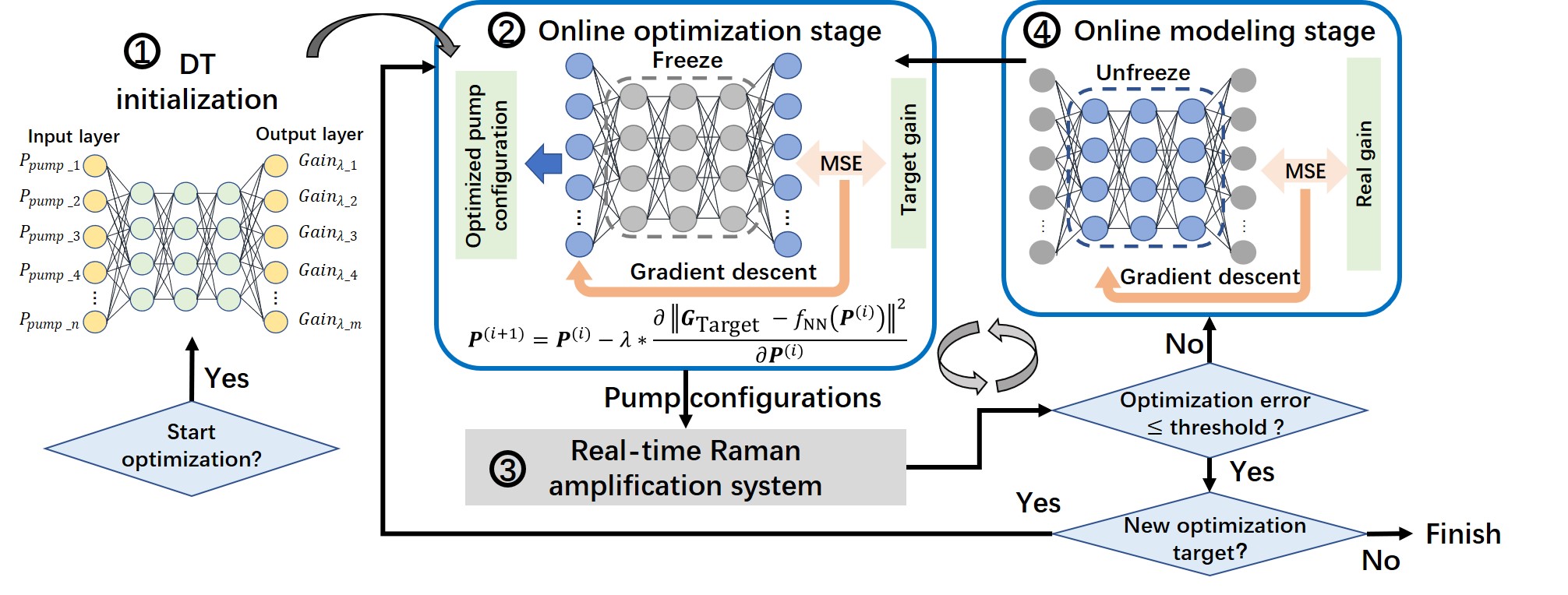
SMOF: Simultaneous Modeling and Optimization Framework for Raman Amplifiers in C+L-band Optical Networks
Xiaomin Liu, Yihao Zhang, Meng Cai, Yichen Liu, Lilin Yi, Weisheng Hu, Qunbi Zhuge*
- Accepted by Journal of Lightwave Technology (JLT), extended from ECOC 2023.
- Proposed a simultaneous modeling and optimization framework (SMOF) to model and optimize the gain profile of an RA in a data-efficient manner.
Digital Twin and Physical Layer Modeling
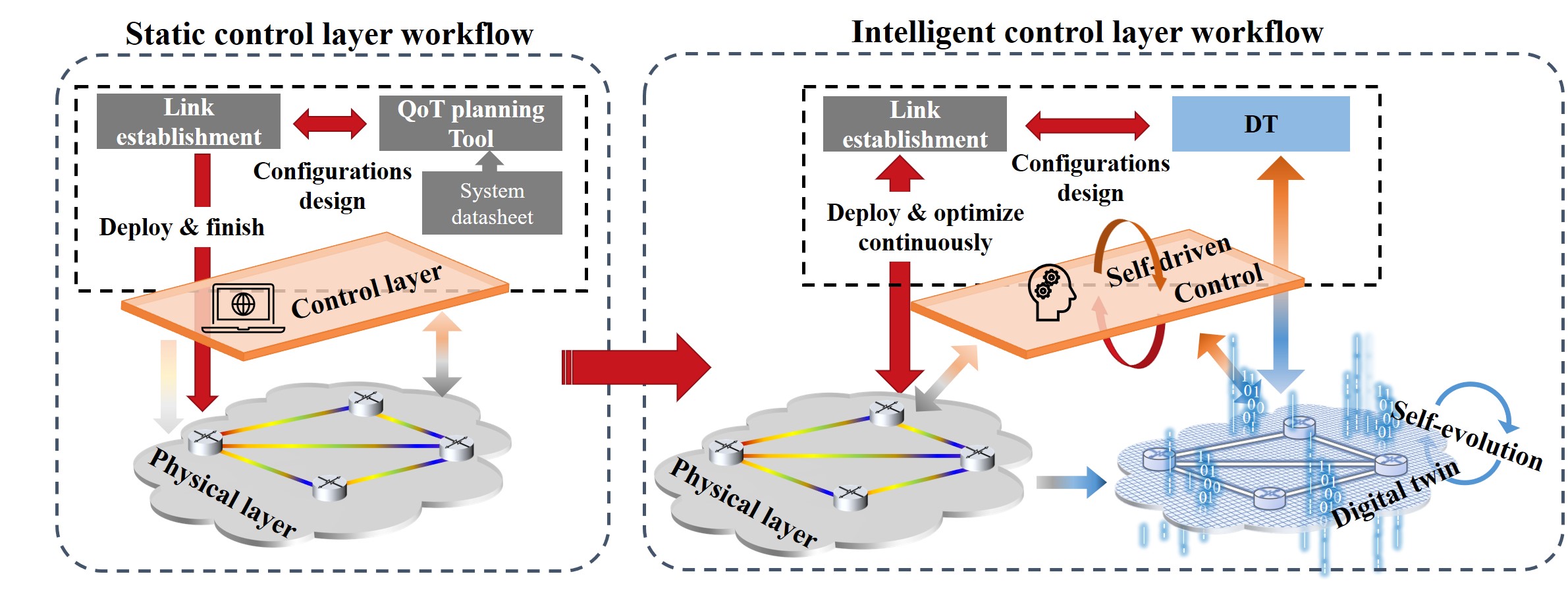
Building A Digital Twin for Intelligent Optical Networks [Invited Tutorial]
Qunbi Zhuge, Xiaomin Liu, Yihao Zhang, Meng Cai, Yichen Liu, Qizhi Qiu, Xueying Zhong, Jiaping Wu, Ruoxuan Gao, Lilin Yi, Weisheng Hu
- Accepted by Journal of Optical Communication and Networking (JOCN).
- Introduced and discussed three key technologies, including modeling, telemetry, and self-learning, to build a DT for optical networks.
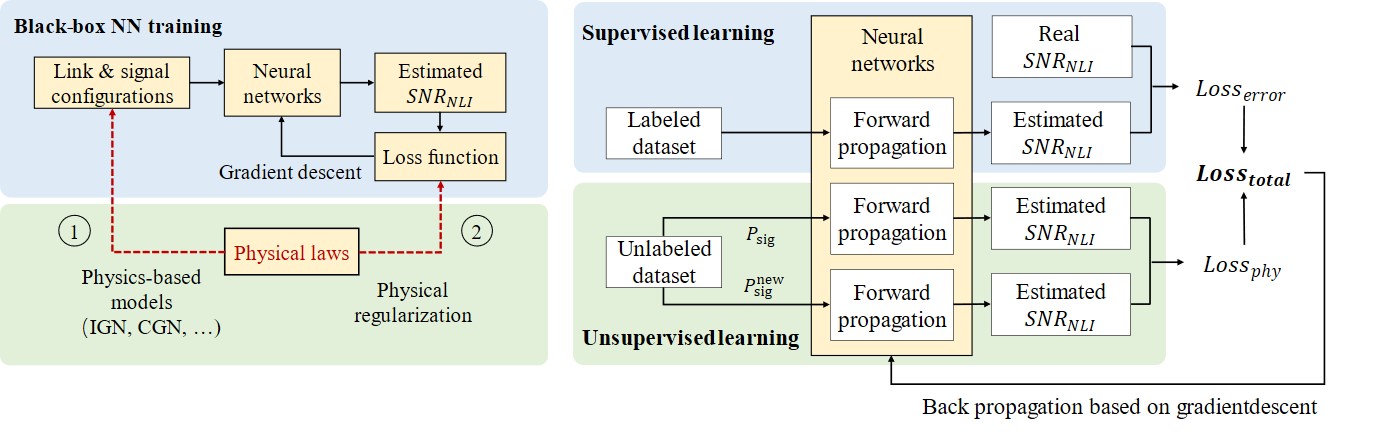
Fusing Physics to Fiber Nonlinearity Model for Optical Networks Based on Physics-Guided Neural Networks
Xiaomin Liu, Yunyun Fan, Yihao Zhang, Meng Cai, Lei Liu, Lilin Yi, Weisheng Hu, Qunbi Zhuge*
- Accepted by Journal of Lightwave Technology (JLT), extended from ACP 2021 as the Best student paper.
- Proposed a fiber model based on physics-guided neural networks (PGNN). The PGNN-based model is compared with traditional neural networks in an experimental link to further illustrate its superior accuracy and generalizability.
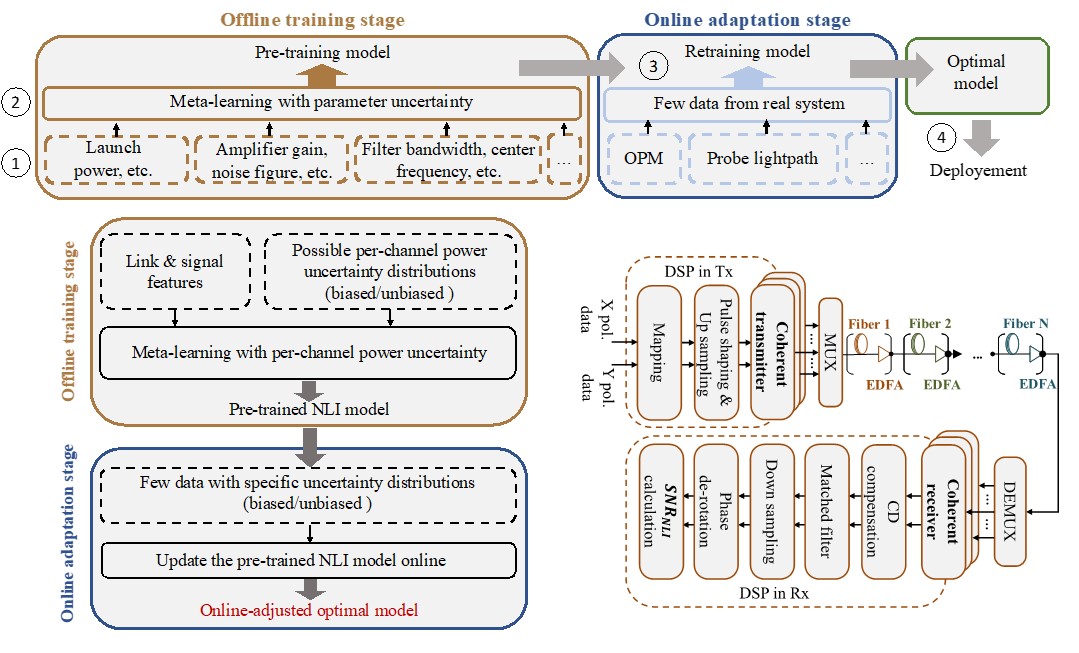
A Meta-Learning-Assisted Training Framework for Physical Layer Modeling in Optical Networks
Xiaomin Liu, Huazhi Lun, Lei Liu, Yihao Zhang, Yichen Liu, Lilin Yi, Weisheng Hu, Qunbi Zhuge*
- Accepted by Journal of Lightwave Technology (JLT), extended from ECOC 2020.
- Proposed a meta-learning-assisted training framework for machine-learning-based physical layer models. This framework improves model robustness to agnostic uncertain parameters during offline training and enables the model to efficiently adapt to the real system with fewer data.
Network Telemetry
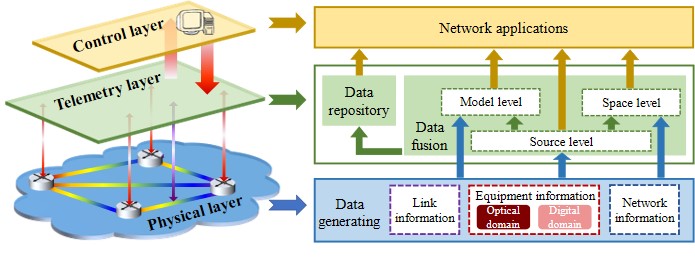
A Data-Fusion-Assisted Telemetry Layer for Autonomous Optical Networks [Invited Paper]
Xiaomin Liu, Huazhi Lun, Ruoxuan Gao, Meng Cai, Lilin Yi, Weisheng Hu, Qunbi Zhuge*
- Accepted by Journal of Lightwave Technology (JLT).
- Proposed a data-fusion-assisted telemetry layer between the physical layer and control layer. The data fusion methodologies are elaborated at three different levels: source level, space level, and model level.